
After waking up, I stroll into my small kitchen and sidle up to the counter. Leaning against it with one hip, I listen to the rumble of the coffee machine as it brews a fresh espresso, and I open my phone. There are a few morning texts from friends and family that say hello and wish me a good day. I grab the coffee and head over to the couch to spend a few minutes scrolling and relaxing. I connect with others on Twitter, then check out my Facebook feed. This is a fairly typical morning for me, as it is for my adult students before they head out to school and their daily lives.
I don’t start my day actively thinking about the digital footprint that I am leaving behind, nor do I consciously decide how I am going to use technology today. However, I have had educational experiences, both in and out of the classroom, that widened my view and encouraged me to interact respectfully and appropriately on and with technology. Many of my students are still learning these lessons or may need refreshers in learning to navigate the ever-growing technological world that impacts every aspect of our lives.
“… it is not the content or use of the innovation, but the change in inter-personal dynamics that the innovation brings with it” (Federman, 2004).
For my EC&I 832 Major Project, I am drawn to developing a curriculum-supported literacy resource that can be utilized in Adult 12 classrooms. I will be focusing on the Life Transitions 30 curriculum as digital citizenship is relevant in all of the modules I use in the course.
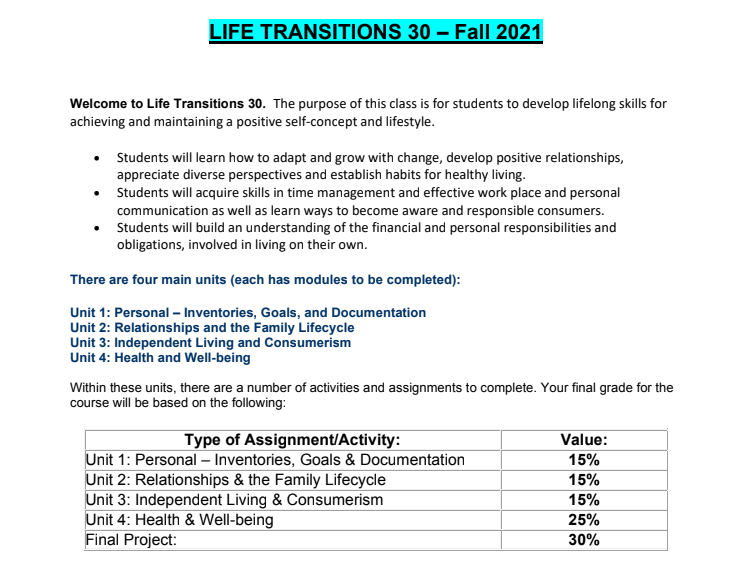
My students are often active users of digital media. Many are starting out in their professional journeys and moving towards future education or career opportunities. With these in mind, it is important that they expand their existing knowledge and develop new strengths and greater digital literacy.
Possible Steps in Development:
- Research what scope and sequences look like for digital citizenship and explore exemplars.
- Reach out to other educators through Twitter and other professional contacts to discover if any others have developed similar materials that can be used as inspiration.
- Ask other educators through Twitter and other professional contacts for their suggestions on what they see as relevant inclusions for digital literacy and citizenship in Life Transitions 30.
- Develop a concept map to incorporate my ideas with my findings from research and discussions. This will allow me to see areas of overlap and identify key components.
- Develop a draft scope and sequence and trial a variety of formats for how this might be presented. Consider adaptive dimension and differentiation during development.
- Share with other educators to elicit input on possible revisions.
- Review, make revisions, and produce final product. Consider developing an infographic to go along with final version.

This looks like a worthwhile resource, Patricia! I love that you already have several specific steps in your plan of action! Life Transitions is such a great place to learn these digital citizenship skills. I think of people often lamenting “Why didn’t I learn _____ in school?” and I know that the resource you develop will help prevent students from asking why they didn’t learn about being a digital citizen (and the many facets it is made up of) in school. All the best as you embark on this project!
Thank you, Kara. Digital presence is something that I have only lightly touched upon with students in the past. I am realizing that it needs to be much more present and integrated throughout my courses.
I just love the way you started your blog. I also like the way in which you have already planned several steps for the completion of your project.
Good luck with your project.
Excited to read more blogs from you!!
Thank you, Shristy. I look forward to reading yours as well. This will be a fun journey for us all.
Patricia, I think that this will be an exciting adventure for you and your students. It would definitely fit in nicely with the subject matter, and I think it will be a lifelong skill or concept that people take with them long after being in your class. I like how you have some of your plans in place and a good foundation of ideas for your project. I look forward to following along on your journey! Keep up the great work.
Thank you, Kelly. I am excited to see how this will shape up as I move forward. There may be some unanticipated twists and turns that may light up like fireworks along the way.
mind blowing starting and planning of your blog. i really love it!! Best of Luck!!
Thank you, Lovepreet!
I have to agree with Shristy, after reading your first sentence I felt very compelled to read your post! Your initial planning in your project seems to be well thought out and I think the work you put into this project will be a great benefit for your students. I really enjoy using Piktochart or Canva to make infographics. I look forward to following your work!
Thank you! I have used Canva before to make infographics, but not Piktochart. I will have to check that out! Which one do you recommend?